
The International Normative Framework of Urban Rights: Documents, Principles, and Limitations in Application
Chapter from the book:
Atalay Şimşek,
S.
&
Karhan,
G.
(eds.)
2025.
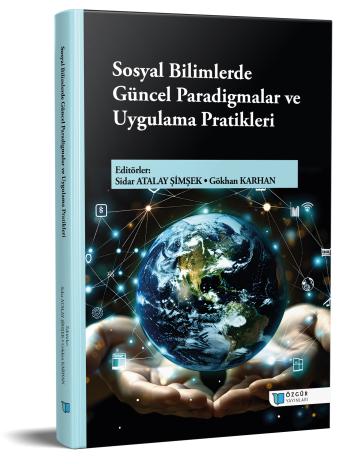
Current Paradigms and Practical Applications in Social Sciences.
Synopsis
This book chapter examines how urban rights are defined through international instruments, the normative principles shaping their scope, and the ways in which the spatial dimension of human rights is rendered visible within these texts. Departing from the assumption that a classical state-centred understanding of human rights is insufficient to explain how rights are experienced in everyday urban life, the study conceptualizes cities as key socio-political spaces where rights are materialized, negotiated, and institutionalized through participatory local government practices.
Urban rights are approached as a normative framework focusing on the urban scale of human rights implementation. In this context, the article analyses the institutionalization of urban rights through major international and regional documents, including the European Charter of Local Self-Government (1985), the European Urban Charter I (1992), the World Charter for the Right to the City (2005), the European Urban Charter II (2008), the Global Charter-Agenda for Human Rights in the City (UCLG, 2011), UN-Habitat Documents (1976-2016) and the European Urban Charter III (2023).
The findings indicate that the normative content of urban rights has expanded over time to include areas such as housing, the environment, participation, equality, culture, digital rights, and sustainability. However, the fact that these rights are predominantly defined through soft law instruments creates significant limitations in terms of binding force and enforceability. The study reveals that while the international normative framework of urban rights offers an important reference for strengthening local democracy and rights-based participatory urban governance, effective implementation requires stronger mechanisms that address participatory governance, institutional capacity, and imbalances between authority and resources.
How to cite this book
License

This work is licensed under a Creative Commons Attribution-NonCommercial 4.0 International License.
Published
DOI
Categories
Copyright (c) 2025 Sidar Atalay Şimşek- Gökhan Karhan; Makbule Şiriner Önver- Günay Gönüllü- Ayşegül Kanbak- Merve Öztürk- Nihal Şirin Pınarcıoğlu Ocakhan- Hamdullah Dönmez- Zeynep Karhan- Hamza Şimşek- Seda Özcan- Esat Atalay- Nalan Altun