
The Impact of Credit Card Usage on Consumer Spending in Turkey
Chapter from the book:
Atalay Şimşek,
S.
&
Karhan,
G.
(eds.)
2025.
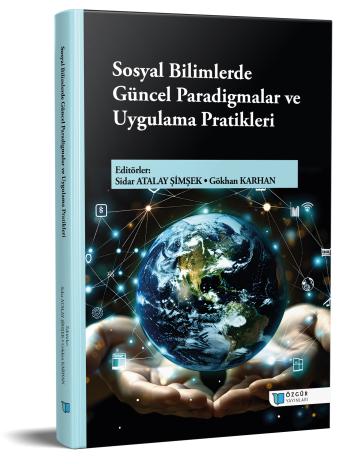
Current Paradigms and Practical Applications in Social Sciences.
Synopsis
This book chapter examines the impact of credit card usage on household consumption expenditures in Turkey from a conceptual and theoretical perspective. Credit cards are analyzed not merely as payment instruments, but as behavioral and financial tools that shape consumption decisions through psychological, cognitive, and expectation-based mechanisms. In economies characterized by income uncertainty and high inflation, credit cards play a critical role in smoothing consumption and sustaining aggregate demand.
The theoretical framework of the chapter is grounded in both traditional consumption theories and behavioral economics. Concepts such as mental accounting, loss aversion, present bias, and self-control problems are employed to explain how credit card usage alters individuals’ perception of budget constraints and intertemporal choices. The discussion emphasizes that while credit cards may support short-term consumption continuity, their excessive and uncontrolled use can increase household indebtedness and financial vulnerability in the long run.
Focusing on the Turkish economy, the chapter offers policy-oriented insights highlighting the importance of financial literacy, income-consistent credit limits, consumer protection regulations, and behavioral policy tools. The study contributes to the literature by providing a comprehensive conceptual analysis of the credit card–consumption nexus without relying on empirical modeling, thereby strengthening the theoretical understanding of modern consumption behavior.
How to cite this book
License

This work is licensed under a Creative Commons Attribution-NonCommercial 4.0 International License.
Published
DOI
Categories
Copyright (c) 2025 Sidar Atalay Şimşek- Gökhan Karhan; Makbule Şiriner Önver- Günay Gönüllü- Ayşegül Kanbak- Merve Öztürk- Nihal Şirin Pınarcıoğlu Ocakhan- Hamdullah Dönmez- Zeynep Karhan- Hamza Şimşek- Seda Özcan- Esat Atalay- Nalan Altun