
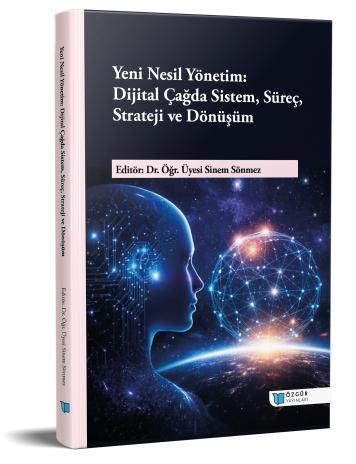
A New Paradigm in the World Order: AI Capital and the Inevitable Rise of Homo Symbiotica: Human-AI Integration
Chapter from the book:
Sönmez,
S.
(ed.)
2025.
New Generation Management: Systems, Processes, Strategy and Transformation in the Digital Age.
Synopsis
The conceptual backbone of this chapter is built around the notions of AI Capital, Human-AI integration, and the Homo Symbiotica perspective. The chapter argues that generative AI is reshaping organizational value creation not merely through technology investment, but through skills transformation, redesign of core processes, and risk governance. Rather than fully displacing traditional distinctions among intellectual, human, and physical capital, this shift compels organizations to reconfigure these elements within a new socio-technical capital configuration. Within this framework, AI Capital is defined as a vector of knowledge, skills, and capabilities related to AI technologies, representing at both individual and organizational levels the capacity to contextualize AI in work settings, deploy it effectively, and translate it into value creation. The Homo Symbiotica concept advanced in this chapter is grounded in the principle that AI should augment rather than replace human cognition (i.e., augmenting, not replacing) in decision contexts characterized by high uncertainty and equivocality; it aims to translate Human-AI complementarity into an “operational collaboration protocol” articulated through task division, oversight, and accountability lines. Ultimately, the chapter recommends institutionalizing Human-AI integration particularly within organizations and high risk domains around the principles of explainable joint decisionmaking, meaningful human intervention, and risk governance, drawing on frameworks such as the NIST AI Risk Management Framework (AI RMF) and UNESCO’s ethical principles as key reference points.
How to cite this book
License

This work is licensed under a Creative Commons Attribution-NonCommercial 4.0 International License.
Published
DOI
Categories
Copyright (c) 2025 Sinem Sönmez; Ergül Söylemezoğlu- Neşe Kafa- Özden İbrahimağaoğlu- Miray Celepli Sütbaş- Gaye Atilla- Bülent Bayrak- Özge Öztürk- Çiğdem Pank Yıldırım- Duygu Akyüz- Şilan Özdamar- Ayhan Işık- Aytuğ Sözüer- Bünyamin Çelebi- Mehmet Aytekin- Lale Karasu- Emre Karasu- Mehmet Güven- Abdullah Fırat