
Ethics, Human Rights and Artificial Intelligence
Chapter from the book:
Yelboğa,
N.
(ed.)
2026.
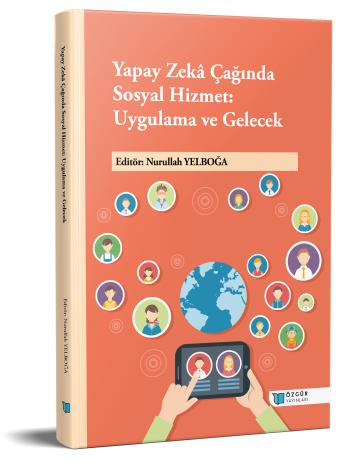
Social Work in the Age of Artificial Intelligence: Practice and Future.
Synopsis
Artificial intelligence has created a significant transformation in social work practices, as in many other fields, with the recent advancements in algorithms, the increase in big data capacity, and the widespread availability of computing power. In the field of social work, artificial intelligence is used in processes such as risk analysis, case management, crisis intervention, mental health support, resource allocation, and predictive assessment. In particular, predictive risk modelling in the field of child protection contributes to the early identification of individuals and groups at risk; meanwhile, artificial intelligence–supported chatbots such as Wysa and Woebot provide accessible support in the field of mental health. However, the use of artificial intelligence in social work should be evaluated not only in terms of technical efficiency but also in terms of ethics and human rights. Algorithmic bias, discrimination, violations of data privacy, surveillance, lack of transparency, and the weakening of human-centered care are among the main issues in this field. These risks become even more evident in social work practices that work with vulnerable groups. The chapter also examines the compatibility between UNESCO’s human rights–based principles on artificial intelligence ethics and the ethical values of the social work profession. It is emphasized that principles such as human dignity, social justice, confidentiality, accountability, and non-discrimination provide a common ethical foundation for both fields. As a result, although artificial intelligence offers significant opportunities in the field of social work, it should be used within the framework of professional ethical principles and human rights through a responsible, human-centered approach. In addition, strengthening artificial intelligence literacy in social work education and developing institutional ethical guidelines are considered important.
How to cite this book
License

This work is licensed under a Creative Commons Attribution-NonCommercial 4.0 International License.
Published
DOI
Categories
Copyright (c) 2026 Nurullah Yelboğa; Safter Bozarslan- Hatice Hale Yurttabir- Merve Karaman- Bekir Altıok- Kamil Ateş- İrfan Yıldırım- Muhammed Yusuf Bulut- Selman Bölükbaşı- Kadri Kınık