
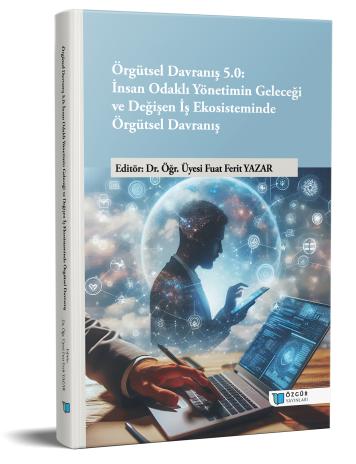
Organizational Behavior 5.0: The Future of Human-Centered Management and Organizational Behavior in a Changing Business Ecosystem
Synopsis
The contemporary era is characterized by a profound and multilayered transformation that is reshaping working life and organizational structures at an unprecedented pace. Digitalization, sustainability, flexible work arrangements, the growing intensity of data, and the increasing prominence of human-centered management approaches are not only redefining how organizations function, but are also transforming employee behaviors, managerial processes, and organizational culture. Such developments expand the conventional conceptual boundaries of organizational behavior and underscore the need for a more contemporary, holistic, and interdisciplinary understanding of the field.
Organizational Behavior 5.0: The Future of Human-Centered Management and Organizational Behavior in the Changing Business Ecosystem has been prepared in response to this very need. The volume brings together a range of timely and thought-provoking themes, including green organizational behavior within the changing business ecosystem, the reconceptualization of organizational behavior in the digital age, the transformation of digital organizational culture through remote work, the positive technology perspective extending from digital burnout to digital flourishing, and the challenges of information overload, analysis paralysis, and human-centered decision-making in digital organizations. In doing so, the book offers an integrated and coherent framework that both reflects the defining dynamics of our time and contributes fresh perspectives to the organizational behavior literature.
At its core, this work is grounded in an approach that places the human being at the center of organizational life, while engaging constructively with technological developments and evolving business dynamics rather than positioning them as opposing forces. In particular, the concepts emphasized by the Industry 5.0 perspective—such as the human–technology balance, employee well-being, corporate sustainability, responsibility in decision-making, and organizational resilience—constitute the principal pillars of the intellectual foundation of this volume. From this standpoint, the book does not merely interpret current developments; it also provides a conceptual basis for understanding the organizations and management approaches of the future.
It is our sincere hope that this volume, prepared for academics, researchers, graduate students, and professionals, will contribute to emerging discussions in the field of organizational behavior and serve as a valuable reference for the relevant literature.
Chapters
How to cite this book
License

This work is licensed under a Creative Commons Attribution-NonCommercial 4.0 International License.
Published
ISBN
DOI
Statistics
Categories
Copyright (c) 2026 Fuat Ferit Yazar; Oğuz Akar- Zümrüt Hatun Demirel- Aytül Güneşer Demirci- Burcu Şefika Doğrul- Güray Yılmaz- Şükrü Bozkurt- Özlem Munise Kaynak