
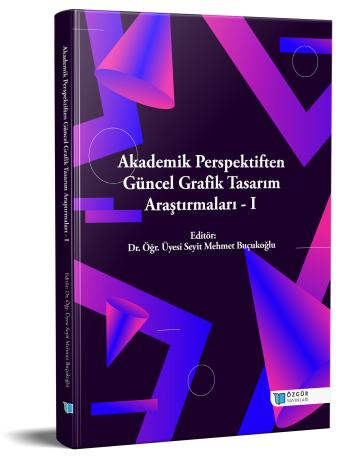
Current Research in Graphic Design from an Academic Perspective - I
Synopsis
The first volume of this comprehensive three-volume academic series, entitled “Current Research in Graphic Design from an Academic Perspective”, examines the discipline of graphic design within the framework of “Design Practice: Method, Application and Production Processes”, drawing on a variety of approaches. Prepared with contributions from leading academics in the field, this book opens up a multi-dimensional discussion on the current trends in graphic design, evolving production practices and areas of research. In this regard, by bringing together the original approaches and research topics of various scholars in the field of graphic design, it aims to highlight current research trends within the discipline and provide a pluralistic foundation for academic production, inviting the reader to engage with the joint presentation of theoretical discussions and practice-based studies, and to evaluate the multifaceted structure of design production processes.
The first chapter of the book is authored by Assoc. Prof. Dr. Çiğdem Tanyel Başar, who, under the title “Rewriting the Image: The Critical Coexistence of Photography and Text in Graphic Design”, examines how graphic design can produce a critical visual discourse through the relationship between photography and text. The study evaluates the layers of meaning in the photographic image using visual rhetorical analysis and descriptive analysis methods, thereby discussing the potential of graphic design to generate social and cultural critique.
In the second section, Asst. Prof. Dr. Ayşegül Sezer, under the title “From Modernist Grid to Rhytmic Composition in Graphic Design: An Analysis of Niklaus Troxler’s Posters”, examining the grid system—one of the fundamental tools for establishing order and visual organisation in design—and analysing its role in creating page layout, hierarchy and composition in graphic design. The study specifically analyses how the grid system can be transformed into a rhythmic and intuitive design language, using Niklaus Troxler’s posters as a case study.
The third and fourth chapters were prepared by Asst. Prof. Dr. Ayfer Demirel. The third chapter, titled “The Role of Colour and Typography in Packaging Design within the Context of Graphic Design”, assesses packaging design as a significant communication field within graphic design, examining the effects of colour and typography on consumer perception, brand identity and product family structure, highlighting how graphic design elements play a strategic role in terms of product visibility on the shelf and brand continuity, from both aesthetic and marketing perspectives.
In the fourth chapter, Asst. Prof. Dr. Ayfer Demirel examines packaging design with a specific focus on cake packaging; under the title “Graphic Design Focused on Color and Typography in Cake Packaging,” she explores food packaging as an application-oriented field of graphic design. In this context, while evaluating the effects of color and typography usage in cake packaging on product family structure, brand consistency, and shelf perception, she emphasizes that the strategic use of design elements in packaging design is a key factor in influencing consumer preferences.
The fifth chapter of the book is by Asst. Prof. Dr. Çağdaş Topçu. In his study titled “Hans Richter: Pioneer of Motion Graphics from the Avant-garde to the Present”, which examines the place of Hans Richter—a key figure in the fields of graphic animation and experimental cinema—in the history of art and design, Çağdaş Topçu explores the effects of avant-garde cinema and abstract animation on the visual language of storytelling. The study focuses on how Richter’s experimental approach serves as a source of inspiration for contemporary graphic design and moving graphics practices.
Finally, in the sixth chapter, Res. Asst. Süeda Şatır Toruk emphasises the importance of scientific illustration within the context of graphic design in her paper entitled “The Visual Storytelling Power of Archaeological Illustration: An Evaluation Through Göbeklitepe”, examining the capacity of archaeological illustration to produce visual narratives. Digital illustration applications based on findings from the Göbeklitepe excavations highlight the role of graphic design in making archaeological data more comprehensible and interpretable.
Serving as a key reference for researchers, postgraduate students and educators engaged in academic production within the field of graphic design, this book is aimed at all readers seeking to develop their design practice and strengthen interdisciplinary perspectives.
I would like to extend my sincere thanks to all the authors who contributed to the preparation of this book.
Asst. Prof. Dr. Seyit Mehmet Buçukoğlu
Chapters
How to cite this book
License

This work is licensed under a Creative Commons Attribution-NonCommercial 4.0 International License.
Published
ISBN
DOI
Statistics
Categories
Copyright (c) 2026 Seyit Mehmet Buçukoğlu; Çiğdem Tanyel Başar- Ayşegül Sezer- Ayfer Demirel- Çağdaş Topçu- Süeda Şatır Toruk