
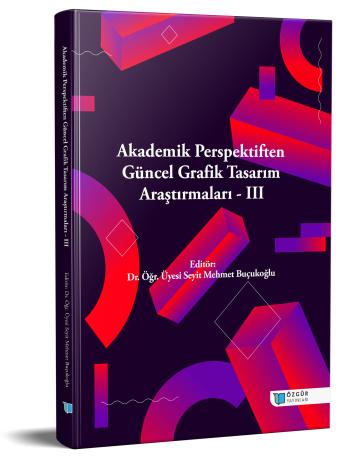
Graphic Design Education in the Digital Age: Data Visualization, New Media Tools, and Interdisciplinary Pedagogical Approaches
Chapter from the book:
Buçukoğlu,
S.
M.
(ed.)
2026.
Current Research in Graphic Design from an Academic Perspective - III .
Synopsis
This chapter examines how data visualization practices in graphic design education have undergone a profound transformation, and addresses the opportunities and responsibilities that the process of digitalization brings to this field. As graphic design evolves beyond a purely visual communication practice into an interdisciplinary domain that bridges the production and conveyance of meaning through data, design education must also respond to this transformation. The theoretical foundation of this chapter is grounded in an original study conducted over a 16-week course with graphic arts students in the Department of Fine Arts Education at Anadolu University, integrating the A/R/Tography (artist/researcher/teacher) approach with a project-based learning model. Throughout the implementation process, students engaged in production across a broad digital spectrum from AI-assisted tools to augmented reality, and from sound and motion data visualization to virtual exhibition spaces. The findings reveal that data literacy in graphic design education must be addressed in conjunction with aesthetic judgment, that artificial intelligence and digital tools can be positioned within design pedagogy through a critical perspective, and that interdisciplinary project processes play a decisive role in shaping graphic designer identity.
How to cite this book
License

This work is licensed under a Creative Commons Attribution-NonCommercial 4.0 International License.
Published
DOI
Categories
Copyright (c) 2026 Seyit Mehmet Buçukoğlu; Ayfer Demirel- Onur Toprak- Fırat Bilal