
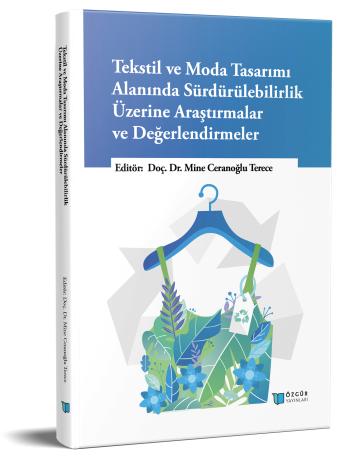
The Denim Garment Design Process Within a Zero-Waste Design Approach
Chapter from the book:
Ceranoğlu Terece,
M.
(ed.)
2026.
Research and Evaluations on Sustainability in Textile and Fashion Design.
Synopsis
Zero waste fashion design provides sustainable garment manufacturing eliminating the fabric waste preventing cut-and-sew waste occurring. Zero waste fashion design process progressing making the two- dimensional pattern design synchronously while designing three-dimensional garment design. The foundation of this study is improved that designed the process the pattern design process with the fabric design process in the 3D pattern making program. Fabric is a value material in view of Zero waste fashion design so that denim is chosen to solve waste problem. Denim is connective material because it has a role in everybody's wardrobe. Denim garments, which are preferred by all segments of society, rich or poor, young or old, male or female, and have been around throughout every era, are timeless designs. Denim is the thirsty fabric because its main component is cotton. Furthermore, the process of dyeing denim fabric indigo blue involves very high water consumption. The production of a single pair of denim trousers consumes between 2,500 and 10,000 litres of water. Its durability, long-lasting use and timeless aesthetic value make denim one of the most valuable materials in the textile industry. For this reason, every part of the denim fabric should be incorporated into the finished garment through various textile design applications.
In this study, an experimental practice which aimed to explore new methods of eliminating textile waste from the production of clothing aimed at zero waste design and textile design practices. That zero-waste fashion design process planned to begin with designing denim fabric. Zero waste fashion design method and denim fabric dyeing process can be used in a harmony design process. With three-dimensional pattern design technologies, many prototype production will not be needed, and waste problem will be prevented with zero waste pattern applications on denim fabric. Three-dimensional mould production technologies will provide a common contribution to the circular economy model by using it in zero waste fashion design method, which requires many trials by providing instant production.
How to cite this book
License

This work is licensed under a Creative Commons Attribution-NonCommercial 4.0 International License.
Published
DOI
Categories
Copyright (c) 2026 Mine Ceranoğlu Terece; Hülya Arabacı- Neslihan Demir- Merve Balkış- Emine Koca- Esra Enes- Nazan Özcan