
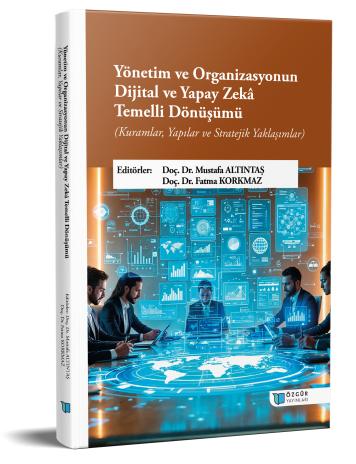
Transformation of Organizational Structures in the Digitalization Process: From Hierarchy to Network and Platform Organizations
Chapter from the book:
Altıntaş,
M.
&
Korkmaz,
F.
(eds.)
2026.
Digital and Artificial Intelligence-Based Transformation of Management and Organization: Theories, Structures, and Strategic Approaches.
Synopsis
Digitalization explanations not only a process of change in the technological infrastructure of organizations, but also a multidimensional transformation in which organizational structures, management approaches, and coordination mechanisms are reshaped. Rapid advancements in information and communication technologies (ICT), the widespread adoption of technologies such as artificial intelligence, big data, cloud computing, and the Internet of Things have significantly rendered traditional bureaucratic organizational structures ineffective, leading organizations towards more flexible, agile, and network-based structures. In this context, this study aims to examine the transformation of organizational structures during the digitalization process, focusing on the transition from hierarchical structures to network and platform organizations. The study first addresses the fundamental characteristics of bureaucratic and hierarchical structures within the framework of classical organizational theories; then, it evaluates the effects of digital transformation on organizational structures. Furthermore, it examines the widespread adoption of new organizational forms such as Scrum teams, the agile organizational approach, and the lean management approach in line with the needs of the digital age. The conceptual foundations of network organizations and platform organizations are explained in detail; and the differences between them in terms of coordination mechanisms, value creation processes, and organizational boundaries are highlighted. Using Amazon as an example, the hybrid organizational structures of the digital age are evaluated, and the effects of data-driven management on organizational transformation are discussed. The study concludes that in the digital age, competitive advantage is possible not only through technological investments but also through adaptable, highly learning-capable, agile, and sustainable organizational structures. In this context, the study emphasizes the importance of evaluating organizational transformation in conjunction with Contingency Theory, the Dynamic Competencies Approach, and a sustainability perspective.
How to cite this book
License

This work is licensed under a Creative Commons Attribution-NonCommercial 4.0 International License.
Published
DOI
Categories
Copyright (c) 2026 Mustafa Altıntaş- Fatma Korkmaz; Abdulsamet Duran- Burcu Atar- Musa Özata- Aslı Öztürk- Uğur Dagtekin- Ahmet Kâmil Kabakuş- Zümral Gültekin- Kevser Küçük Can- Mustafa Atsan- Mehmet Ertem- Erol Tekin- Benazir Öztürk