
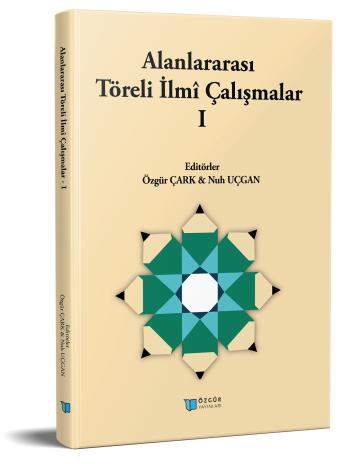
An Attempt on a Töre-Based Political Theory: A Virtuous City and a Global Order of Virtue Grounded in the Knowledge–Power Relationship
Chapter from the book:
Çark,
Ö.
&
Uçgan,
N.
(eds.)
2025.
Interdisciplinary Töreli Scientific Studies I.
Synopsis
The primary aim of this essay is to present a töre-based theory of politics. To achieve this objective, the central question explored is: What constitutes the fundamental criterion for defining a political thought or political regime as Islamic? The answer proposed is that a political system can be considered Islamic only if it possesses a moral foundation. In other words, a political thought or regime may be regarded as Islamic solely to the extent that its connection with töre is preserved. To substantiate this claim, it becomes necessary to focus on the relationship between knowledge and power within Islamic political thought and to introduce new conceptual proposals. Overcoming this challenge requires appealing to a historical periodization upon which töre may be grounded. Thus, the requirement to link a political thought or regime to töre as the essential criterion of its Islamic character necessitates examining the political and social order on the basis of its relationship to knowledge. The necessity of grounding the connection between töre and politics in the knowledge–power relationship, in turn, requires identifying the foundational concepts of Islamic political thought from this perspective. Determining the concepts that make it possible to view Muslims as a socio-political whole and construct their shared historical memory through the lens of the knowledge–power nexus leads to the identification of the following foundational concepts: Hatem al-Anbiya, the Age of Happiness (Asr al-Saadah), and the Rightly Guided Caliphs (al-Khulafa’ al-Rashidun). In this essay, the Age of Happiness is defined as the period of the absolute unity of töre and politics, while the era of the Rightly Guided Caliphs is identified as the period of their historical unity; the subsequent paradigm, however, is argued to rest upon the supervision of politics by töre. The final conceptual proposal of this essay—the universal horizon grounded in futuhat (conquests)—is used both to articulate the Muslim approach to international politics and to support the claim that töre-linked politics cannot be confined to a specific territory but must instead be conceived at the level of the world-space.
Keywords:
How to cite this book
License

This work is licensed under a Creative Commons Attribution-NonCommercial 4.0 International License.
Published
DOI
Categories
Copyright (c) 2025 Özgür Çark, Nuh Uçgan