
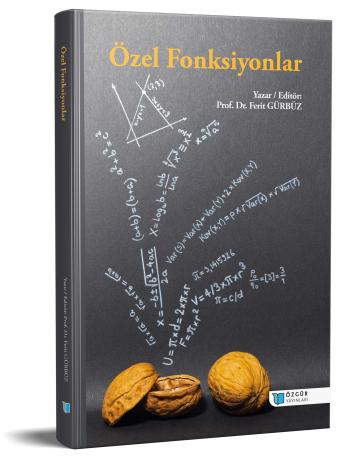
Special Functions
Synopsis
Special functions are those that arise naturally as solutions to specific types of differential equations and cannot be expressed using ordinary elementary functions, yet they play a fundamental role in physics, engineering, and mathematics. These functions are typically defined by the symmetries, boundary conditions, or physical models from which they emerge; for example, they appear inherently in problems with cylindrical or spherical symmetry, in certain energy levels of quantum systems, or in the analysis of potential fields. Each family of special functions represents the standard solution set of a corresponding differential equation, making it easier to express and analyze solutions in a systematic way. Many special functions possess structural properties such as orthogonality, stable behavior under integral transforms, and well-defined boundary characteristics; these qualities make them powerful tools for constructing Fourier-like expansions and decomposing complex physical systems. Moreover, numerous families of special functions can be viewed as specific instances of more general function families, revealing the interconnectedness of mathematical structures and allowing diverse physical models to be treated within a unified framework. In this book, we aim to provide the reader with a comprehensive framework by examining the emergence of special functions, their basic properties and their roles in various applications with both a conceptual and detailed approach.
How to cite this book
License

This work is licensed under a Creative Commons Attribution-NonCommercial 4.0 International License.
Published
ISBN
DOI
Statistics
Categories
Copyright (c) 2025 Ferit Gürbüz