
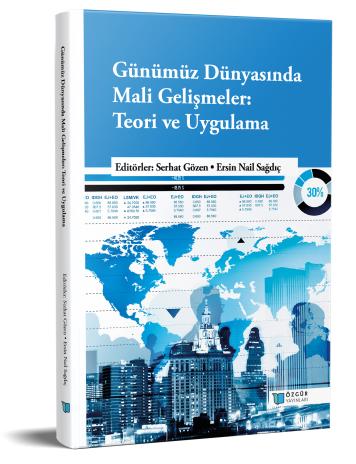
Green Budgeting: A Fiscal Policy Instrument for Sustainable Development
Chapter from the book:
Gözen,
S.
&
Sağdıç,
E.
N.
(eds.)
2025.
Fiscal Developments in the Contemporary World: Theory and Practice.
Synopsis
Global environmental degradation and climate change have reshaped the fiscal policy agenda, requiring governments to integrate ecological priorities into public finance. This study examines green budgeting as a strategic fiscal governance instrument that aligns budgetary decisions with environmental sustainability and the Sustainable Development Goals (SDGs). Drawing on theoretical frameworks from environmental economics, public choice, and institutional economics, the paper explores the conceptual foundations, methodological approaches, and institutional dynamics of green budgeting. International experiences—including those of the European Union, France, Ireland, New Zealand, Indonesia, and the Philippines—are analyzed to identify best practices and persistent challenges. The findings highlight that green budgeting enhances fiscal transparency, accountability, and resource efficiency while supporting low-carbon innovation and climate-resilient growth. However, methodological complexities, data limitations, and political-institutional constraints remain major barriers to its full implementation. The study argues that integrating climate objectives into budget cycles not only strengthens fiscal discipline but also provides a financial architecture for sustainable development. Ultimately, green budgeting is presented as a transformative approach that redefines the role of public finance in the transition toward a more sustainable global economy.
How to cite this book
License

This work is licensed under a Creative Commons Attribution-NonCommercial 4.0 International License.
Published
DOI
Categories
Copyright (c) 2025 Serhat Gözen- Ersin Nail Sağdıç; Göksel Karaş- Hasan Hüseyin Aleçakır- Hatice Dayar- İlhan Korkmaz- Güner Tuncer- Ersin Nail Sağdıç- Fazlı Yıldız- Ebru Yalçın- Süleyman Emre Özcan- Özer Özçelik- Hatice Arslanparçası- Serhat Gözen- Ebru Karaş- Fatma Alkan- Gülistan Altıok- Meltem İrteş Gülşen - Betül Hayrullahoğlu