
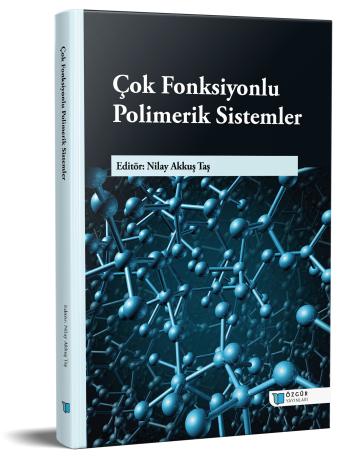
Multifunctional Polymeric Systems
Synopsis
Materials science, with its journey over the past century, has been one of the most important dynamics shaping the technological advancement of human history. Polymer science, in particular, has broken free from the traditional concept of "plastic" and intertwined with nanotechnology, biotechnology, and energy engineering, transforming materials from mere space-filling structures into "smart and functional" systems that respond to their environment, store energy, and provide protection. This book, titled "Multifunctional Polymeric Systems," is the product of this profound transformation and interdisciplinary interaction.
The global energy crisis, environmental pollution, and new advancements in health technologies are compelling scientists to design much more efficient, sustainable, and high-performance materials. This book has been meticulously prepared with the contributions of expert researchers in the field to offer innovative solutions to these global challenges from a polymeric materials perspective. The book takes a holistic approach, addressing a wide range of applications, from biologically derived polymers to hybrid energy systems.
The first chapters of the book focus on biopolymers, which are shaped by sustainability. In particular, the chapters examining the potential of biopolymers in radiation shielding represent a strategic response to the need for environmentally friendly protective shields in nuclear technology and the medical field. Furthermore, the structural design and future projections of biopolymer-based functional materials reveal how green chemistry principles are blended with advanced technology.
With the digitalization of technology and the emergence of the "Internet of Things," sensing technologies have gained vital importance. The chapter on conductive polymers for next-generation sensors in our book explains how the electrical conductivity of materials transforms them into sensitive "sensory organs" for applications ranging from biomedical to environmental monitoring. Ionic liquid-based polymer composites, approached with a similarly innovative approach, bring a new breath to the literature by pushing the boundaries of solvent-material interactions.
One of the most striking and current focuses of the book is undoubtedly "Energy." The efficient use and storage of energy is one of the most pressing engineering challenges of our time. In this context, the chapter on Polymer/Phase Change Material (PCM) hybrid systems examines innovative approaches to thermal energy storage and offers insightful insights into thermal management. The final section, Polymer–MOF (Metal-Organic Skeleton) structures, with their high surface areas and tunable pore structures, represent the cutting edge of polymer science in energy applications (hydrogen storage, battery technologies, etc.).
This work, which aims to bridge the gap between theory and practical application, appeals to a wide audience, from graduate students to experienced academics, from R&D engineers to industry professionals. I hope that "Multifunctional Polymeric Systems" will contribute to the materials science literature in our country, inspire young researchers, and pave the way for new scientific collaborations.
With my best regards to all our readers who add value to science and the future...
Chapters
How to cite this book
License

This work is licensed under a Creative Commons Attribution-NonCommercial 4.0 International License.
Published
ISBN
DOI
Statistics
Categories
Copyright (c) 2025 Nilay Akkuş Taş; Mustafa Ersin Pekdemir- Serpil Yalçın Kuzu- Sibel Selçuk Pekdemir- Umut Çelikoğlu- Recep Taş- Hüseyin Akbaş- Derya Kahraman Döğüşcü- Nilay Akkuş Taş- Nihal Deligönül