
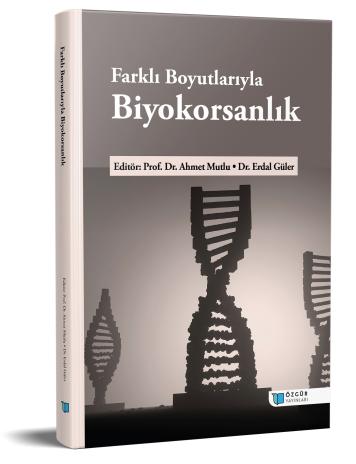
Biopiracy in its Various Dimensions
Synopsis
Biopiracy, a relatively new phenomenon with an approximately 30-year history, refers to the use of biological diversity and genetic materials for commercial interests, as well as the unauthorized patenting of the traditional/authentic knowledge of indigenous and local communities. The problem of biopiracy is multidimensional in nature; therefore, alternative solutions can only be developed through an interdisciplinary perspective. For some time now, biopiracy has been one of the issues gaining increasing importance worldwide, both at the policy level and within academic literature. Biodiversity, which gained prominence alongside the concept of sustainable development beginning in the 1990s, has over time come to the fore together with the traditional/authentic knowledge of local communities associated with it. Undoubtedly, the rapid increase in the economic value of genetic resources driven by advances in biotechnology has played a decisive role in the emergence of this agenda.
In Türkiye, it cannot yet be said that biopiracy is perceived as a multidimensional problem. The public agenda on this issue has largely remained limited to incidents involving the interception of certain endemic species belonging to the country at border crossings. Consequently, both scientific research and policy-making efforts in this field lag considerably behind the international agenda. In the international literature, biopiracy has been extensively discussed since the 1990s with its sociological, economic, and legal dimensions, and this discussion has begun to shape both international and national policies. By contrast, in Türkiye, multidimensional scientific studies on biopiracy have only started to emerge after the 2020s. Therefore, the agenda surrounding biopiracy—which is a highly significant policy and research topic on a global scale—needs to gain momentum in Türkiye as well. For a country that is globally recognized as a geography rich in endemic species, genetic resources, and traditional knowledge accumulated over centuries, the development of such an agenda is an urgent necessity.
This book has been produced in response to this need. The volume addresses the problem of biopiracy through its biological, environmental, administrative, legal, and educational dimensions. Each chapter of the book has been prepared by competent academics and practitioners who have long studied the issue of biopiracy within their respective scientific disciplines. By examining biopiracy in a multidimensional manner, this book aims to foster public and academic awareness of biopiracy in Türkiye and to contribute to policy-making processes.
With the hope that it will be useful.
Chapters
How to cite this book
License

This work is licensed under a Creative Commons Attribution-NonCommercial 4.0 International License.
Published
ISBN
DOI
Statistics
Categories
Copyright (c) 2025 Ahmet Mutlu- Erdal Güler; Erdal Güler- Ümit İncekara- Ahmet Mutlu- Belkıs Muca Yiğit- İlker Çinbilgel- Bahadır Akman- Erdem Seven- Tamer Soysal- Tuğba Canatan Akıcı- Helin Ayaz- Yasemin Tekin- Hasan Genç- Huriye Deniş Çeliker