
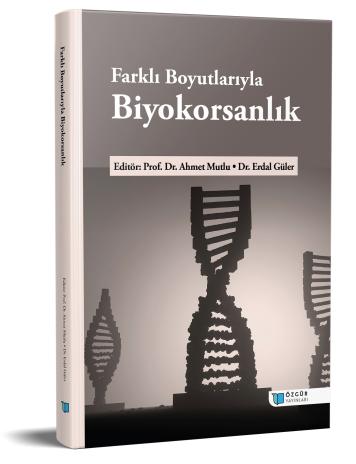
Biopiracy Cases Indirectly Arising from the Patent System
Chapter from the book:
Mutlu,
A.
&
Güler,
E.
(eds.)
2025.
Biopiracy in its Various Dimensions.
Synopsis
The increasing commercialization of genetic resources and associated traditional knowledge through their transformation into biotechnological products has brought the misappropriation of such resources and knowledge through unjustified and unauthorized patenting to the forefront of international normative negotiations. Developing countries, which are rich in biological diversity and constitute the cradle of genetic resources and associated traditional knowledge, have characterized these practices as biopiracy and have increasingly sought equity and fairness in international fora. Conversely, countries with advanced biotechnological capacities have found themselves the subject of biopiracy allegations in relation to inventions based on genetic resources and traditional knowledge. This chapter examines how the patent system, rather than functioning as a direct instrument of misappropriation, has indirectly facilitated biopiracy due to structural gaps and limitations in its implementation with respect to genetic resources and traditional knowledge. In this context, the chapter analyzes prominent and widely debated cases—such as Neem, Turmeric, Enola bean, Ayahuasca, and Maca—which have attracted international attention and contributed to the development of normative responses. These cases demonstrate that the failure to disclose the origin of genetic resources and the source of associated traditional knowledge in patent applications has led to the granting of patents for inventions lacking novelty and inventive step. They further reveal that such patents have often been revoked only through lengthy, complex, and costly opposition procedures, during which patent holders continued to benefit from de facto exclusive rights. The chapter also examines the international legal framework governing genetic resources and traditional knowledge, with particular reference to the Convention on Biological Diversity, the Nagoya Protocol, and the WIPO Treaty on Intellectual Property, Genetic Resources and Associated Traditional Knowledge. In this context, it assesses how mandatory disclosure requirements in patent applications may strengthen the relationship between the patent system and access and benefit-sharing mechanisms.
How to cite this book
License

This work is licensed under a Creative Commons Attribution-NonCommercial 4.0 International License.
Published
DOI
Categories
Copyright (c) 2025 Ahmet Mutlu- Erdal Güler; Erdal Güler- Ümit İncekara- Ahmet Mutlu- Belkıs Muca Yiğit- İlker Çinbilgel- Bahadır Akman- Erdem Seven- Tamer Soysal- Tuğba Canatan Akıcı- Helin Ayaz- Yasemin Tekin- Hasan Genç- Huriye Deniş Çeliker