
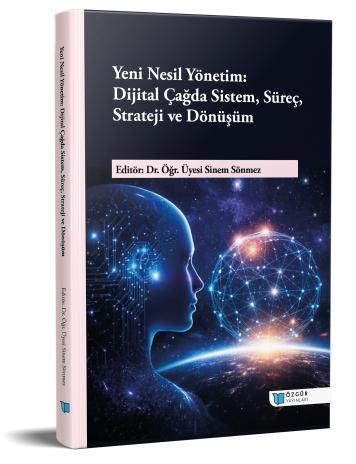
Change and Leadership in the Digital Age
Chapter from the book:
Sönmez,
S.
(ed.)
2025.
New Generation Management: Systems, Processes, Strategy and Transformation in the Digital Age.
Synopsis
Advancements in communication and information technologies, as well as their applications, have profoundly transformed various aspects of life, leading to the emergence of innovative ideas, approaches, and behaviors. Initially, these changes affected individuals and subsequently influenced organizational structures and management practices. The digital age, spurred by globalization and rapid technological developments, directly impacts organizations, which are essential units of society and the national economy. This evolution has resulted in significant transformations within these entities. As digitalization progresses, the nature of management activities, business processes, and the tools utilized by leaders continue to evolve. In an environment increasingly dominated by technology and digital media, organizations require leaders who can initiate and effectively manage these transformations, guiding their teams through the change process. The capability of leaders to align the technical and human elements of their organizations with contemporary innovations is crucial for gaining a competitive advantage and achieving organizational success. Accordingly, this study examines the role of effective leaders who possess advanced managerial skills necessary for leading change in the digital age. It focuses on their ability to manage the digitalization process, remain informed about emerging innovations, and effectively integrate these advancements into organizational operations and processes.
How to cite this book
License

This work is licensed under a Creative Commons Attribution-NonCommercial 4.0 International License.
Published
DOI
Categories
Copyright (c) 2025 Sinem Sönmez; Ergül Söylemezoğlu- Neşe Kafa- Özden İbrahimağaoğlu- Miray Celepli Sütbaş- Gaye Atilla- Bülent Bayrak- Özge Öztürk- Çiğdem Pank Yıldırım- Duygu Akyüz- Şilan Özdamar- Ayhan Işık- Aytuğ Sözüer- Bünyamin Çelebi- Mehmet Aytekin- Lale Karasu- Emre Karasu- Mehmet Güven- Abdullah Fırat