
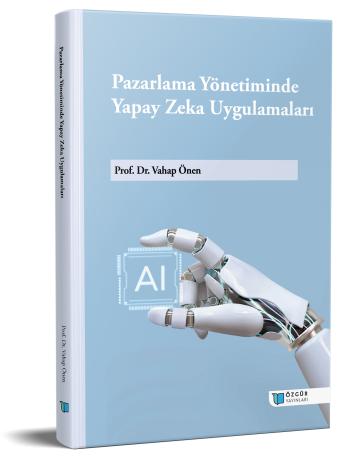
The Rise of Virtual Presenters in Digital Marketing Communication: An Evaluation Through the Case of Alara X
Chapter from the book:
Önen,
V.
(ed.)
2026.
Artificial Intelligence Applications in Marketing Management.
Synopsis
Digital technologies have fundamentally altered how marketing communication works. The rise of social media brought with it influencer marketing, content-driven strategies, and the logic of algorithmic visibility each reshaping what it means to reach an audience online. Among the more striking outcomes of this shift are AI-generated virtual personas: digital characters with no real human identity behind them, producing content, building followings, and changing how brands connect with people. This section looks at where AI-based virtual presenters stand in digital marketing communication and more specifically, how audiences make sense of them. The goal is not simply to catalogue a new technology. It is to argue that virtual presenters represent a genuinely new kind of communicative actor, one with real implications for brand messaging and content production. To ground that argument, the study takes Alara X as its case, a virtual AI presenter developed in Turkey. Three questions drive the analysis: How do audiences interpret this character? What qualities do they assign to her? and what does her presence actually do in the context of digital marketing? The theoretical framework pulls from several directions. Baudrillard's simulation theory sits at one end. Social presence theory and Walther's hyperpersonal model add a communication-specific layer. Parasocial relationship theory rounds it out. Methodologically, the study is qualitative and proceeds in two stages. First, Alara X's five most-viewed YouTube videos were selected and subjected to content analysis, a systematic process of categorizing textual, visual, and auditory elements. Second, the most-liked comments from each video, along with their reply threads, were compiled. The final corpus: 4,132 comments, coded using MAXQDA.
The discourse analysis findings reveal that audience experience crystallizes around three interrelated themes: identity attribution, reality questioning, and emotional bonding. Crucially, these three categories map directly onto constructs that are central to marketing communication source credibility, trust formation, and parasocial relationship development. The study concludes that virtual presenters are not transient actors in digital marketing communication. Rather than reflecting a passing curiosity about new technology, they appear capable of sustaining genuine, durable, and multidimensional communicative dynamics.
How to cite this book
License

This work is licensed under a Creative Commons Attribution-NonCommercial 4.0 International License.
Published
DOI
Categories
Copyright (c) 2026 Vahap Önen; Rahşan Pektaş- Ayben Ceyhan Günay- Şahnaz Ekşioğlu- Malik Dündar- Fatma Avan- Halime Büşra Yaşar- Işıl Keskin Şahan- Dilek Yalçın- Cansu Gökmen Köksal- Cemile Küçük- Ebubekir Işık