
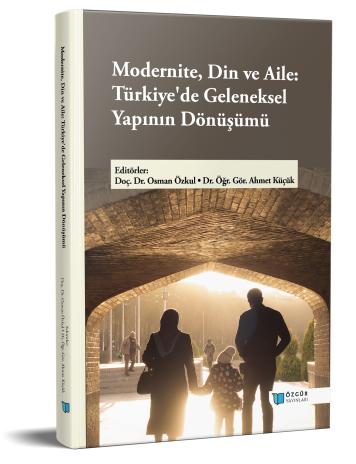
Modernity, Religion, and Family: The Transformation of Traditional Structure in Türkiye
Synopsis
The family, as the fundamental building block of society, has always existed in a state of dynamic transformation and adaptation throughout history. This transformation signifies not only structural and functional change but also a cultural and sociological process in which social values, identities, and relational patterns are continuously redefined. This volume aims to provide an in-depth and critical analysis of the multi-layered transformation of the family institution in Turkish society, approached from diverse disciplinary perspectives.
Curated as an edited collection, this work represents a concerted effort to understand the phenomenon of the family in Turkey within both historical and contemporary contexts. The book approaches the family not merely as a traditional institution, but as an entity constantly reshaped under the influence of dynamics such as modernization, globalization, digitalization, legal reforms, and social movements. In this regard, the chapters herein seek to examine the transformation of the family from various dimensions, offering a holistic perspective on the subject.
The initial chapters focus on the mindset shifts within Turkish society, starting from the symbolic realms of cultural change. The opening section, which analyzes changes in naming culture through Pitirim Sorokin's cultural typology, reveals how social values transform over time and how this transformation is reflected in individual choices. Subsequently, the analysis of communal eating and table culture examines the role of dining practices in familial and social cohesion from biological, psychological, and cultural standpoints, questioning the erosive effects of modern individualistic tendencies on this ancient practice.
Moving forward, the book addresses the transformation of the family institution during the modernization process and the emerging phenomenon of singleness as a consequence. This section discusses how the secular and pleasure-oriented lifestyle of modernity has weakened family bonds and confronted individuals with loneliness and identity crises. The pedagogical analysis of family dynamics, meanwhile, emphasizes that the family is not merely a biological union but also a multidimensional educational environment that nurtures an individual's cognitive, affective, and spiritual development.
In the middle sections, issues that have been intensely debated in Turkey in recent years, such as the LGBTİQA+ movement and the Istanbul Convention, are critically examined within the context of the family institution. These chapters evaluate the impact of gender discourses, global human rights paradigms, and international conventions on the Turkish family structure within the framework of cultural legitimacy and social consensus.
The later sections provide in-depth analyses of the effects of modernity and secularization on the family and the transformations in Turkish family structure brought about by neoliberal policies. These chapters demonstrate how economic systems, ideological approaches, and political choices shape and transform intra-family dynamics. The impact of digital culture on family relations and the understanding of privacy addresses one of the most current and defining issues of our time, questioning how technological advancements are redefining the family institution.
In the final chapters, the position of the family within the social structure is examined through sociological theories, and the factors causing role changes in the Turkish family are critically assessed. The analysis of power-sharing within the family opens for discussion the tense relationship between patriarchy and feminism within Turkey's hybrid and shifting social context.
This book is a comprehensive study that, through contributions from field experts, addresses the transformation of the family institution in Turkey from a multifaceted and interdisciplinary perspective. While each chapter offers a profound analysis in its own right, the work as a whole sheds light on the historical, cultural, sociological, economic, and technological dimensions of the family phenomenon. We hope this study will not only contribute to academic literature but also inspire social policies and family-oriented social projects.
Finally, I would like to extend my gratitude to all the authors who contributed to this valuable work, to those involved in the publication process, and to the readers. It is my hope that this book will serve as a significant resource for anyone seeking to understand the transformation of the Turkish family and to develop sound perspectives for the future.
Chapters
How to cite this book
License

This work is licensed under a Creative Commons Attribution-NonCommercial 4.0 International License.
Published
ISBN
DOI
Statistics
Categories
Copyright (c) 2025 Osman Özkul- Ahmet Küçük; Osman Özkul- Fatma Göl- Nurenda Coşkun- Yasemin Yaşar- Abdullah Adıgüzel- İlhan Karaca- Zeynep Toprak- Fatih Aydın- Ahmet Küçük- İbrahim Kaygusuz- Hakkı Kalaycı- İshak Torun