
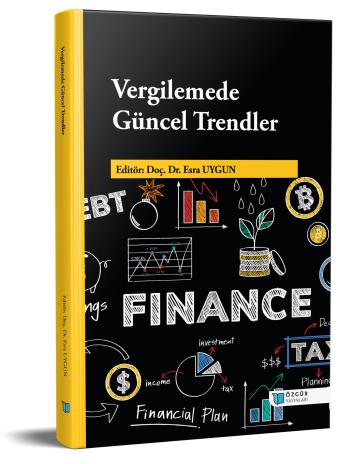
Current Trends in Taxation
Synopsis
Taxation has evolved beyond being a purely technical instrument designed solely to meet public revenue needs; it has instead become a multi-layered structure intertwined with economic reality, digital transformation, sustainability, and principles of governance. Global economic integration, technological advancements, and the expanding responsibilities of public finance have made it necessary to reconsider both the normative and practical dimensions of tax law. Within this framework, the present volume entitled “Taxation: Current Trends” aims to address contemporary debates in the field of taxation from multiple perspectives.
The chapters included in this book offer a rich and comprehensive examination of the relationship between the classical principles of taxation and modern developments. The study that analyzes the economic approach principle in tax law through the concepts of tax avoidance and simulation, with specific reference to donation contracts, provides concrete examples of the tension between legal form and economic substance. The chapter focusing on the transformative role of legislative processes in achieving tax harmonization within the European Union highlights the norm-setting capacity of supranational tax governance and its impact on Member States.
The effects of digitalization on taxation constitute one of the central themes of the book. The challenges related to the taxation of artificial intelligence reveal the new difficulties faced by global tax systems, while the chapter addressing digitalization in the fight against fraudulent documentation and the use of new artificial intelligence tools in tax audits examines the transformation of tax enforcement from a practical standpoint. In addition, the analysis of the impact of digitalization on tax administrations provides a comprehensive assessment in terms of administrative capacity, efficiency, and legal boundaries.
The volume also includes original analyses on the economic and sectoral implications of taxation. The general overview of top taxpayers in Türkiye offers significant insights into the distribution of the tax burden and the profile of highly visible taxpayers, whereas the examination of withholding tax practices in the Turkish tea sector through the case of ÇAYKUR sheds light on the structural characteristics of sector-specific taxation. Moreover, the chapter addressing accommodation tax as a financing instrument for sustainable tourism evaluates how environmental and fiscal objectives can be integrated into taxation policies, drawing on international practices.
One of the chapters further discusses taxation and public budget financing from the perspective of sustainable development, addressing policy priorities and presenting a holistic view of the relationship between taxation and long-term fiscal and social objectives. This approach underscores that taxation is a strategic instrument shaping not only today’s public finance but also that of the future.
Prepared with contributions from scholars specialized in their respective fields, this volume examines current trends in taxation by combining theoretical depth with practical considerations. It is hoped that this work will serve as a valuable reference for academics, practitioners, policymakers, and graduate students, as well as for all readers with an interest in taxation. I would like to express my sincere gratitude to all the contributing authors for their efforts.
Assoc. Prof. Dr. Esra Uygun
Chapters
How to cite this book
License

This work is licensed under a Creative Commons Attribution-NonCommercial 4.0 International License.
Published
ISBN
DOI
Statistics
Categories
Copyright (c) 2025 Esra Uygun; Orçun Avcı- Hüseyin Akkaya- Birol Ubay- Sebiha Yıldız- Selçuk Buyrukoğlu- Yasemin Arıman- Ali Saklan- Osman Kağan Ergür- Rabia Tuğba Eğmir