
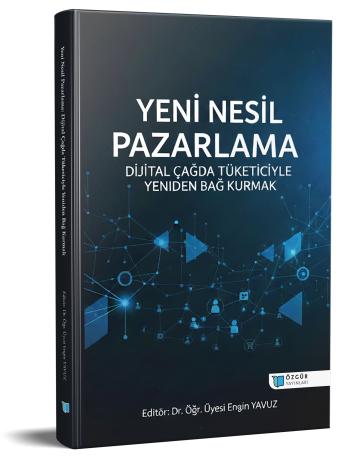
From Influencer to Trustfluencer: The New Face of Digital Trust
Chapter from the book:
Yavuz,
E.
(ed.)
2025.
Next-Generation Marketing: Reconnecting with Consumers in the Digital Age.
Synopsis
In today’s rapidly digitalizing world, social media has become one of the most influential communication channels shaping consumer behavior. Within this transformation, influencer marketing has emerged as a strategic tool that enables brands to build more sincere, personalized, and trust-based relationships with their target audiences. Influencers, through the parasocial relationships they establish with large follower communities, transcend traditional advertising and function as a new form of authority that strongly influences consumers’ decision-making processes. However, the rise in advertising literacy and digital skepticism has led consumers to demand more than mere visibility from influencers. At this point, the concept of the “trustfluencer” emerges, representing a new model of digital influence grounded in credibility, authenticity, transparency, and ethical communication.
Trustfluencers are digital opinion leaders who build long-term relationships with their audience, produce value-oriented content, and act transparently in brand collaborations. Their trust capital plays a decisive role in shaping purchase intention, brand loyalty, and consumer engagement. The literature indicates that factors such as influencer credibility, perceived expertise, similarity, and message quality directly affect consumer trust. Moreover, the rise of AI-driven influencers has introduced a new dimension to digital trust, raising questions about authenticity and the nature of digital influence. This study provides a comprehensive examination of the shift from influencer marketing to the trustfluencer paradigm, highlighting the growing importance of digital trust in contemporary marketing strategies.
How to cite this book
License

This work is licensed under a Creative Commons Attribution-NonCommercial 4.0 International License.
Published
DOI
Categories
Copyright (c) 2025 Engin Yavuz; Şahver Omerakı Çekirdekci- Cuma Akbay- Yeşim Aytop- Mehmet Zahit Görgülü- Ömer Büyükbaş- Kübra Uyar- Yasemin Karabulut- Senem Uçan- Mehmet Emin Akkılıç- Mehmet Selim Dikici