
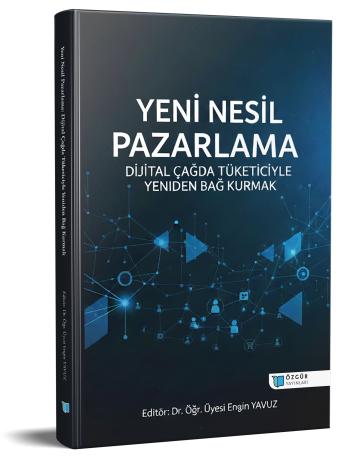
Smart Stadium and City Experience: AI-Powered Integration for Urban Branding
Chapter from the book:
Yavuz,
E.
(ed.)
2025.
Next-Generation Marketing: Reconnecting with Consumers in the Digital Age.
Synopsis
This study examines how smart stadiums play a critical role in modern urban branding strategies, going beyond enhanced operational efficiency and enriched fan experience. Starting from the necessity for cities to establish a unique identity in the competitive global market, the paper details the transformation of traditional sports venues into multi-functional, integrated systems through Artificial Intelligence (AI)-powered technologies, the Internet of Things (IoT), and 5G.
Smart stadiums provide operational benefits by leveraging AI and big data analytics to optimize energy management, as well as enhance crowd control and security. Concurrently, they create personalized and enriched fan experiences using mobile apps, Augmented Reality (AR), and Virtual Reality (VR), helping venues compete with increasingly attractive at-home viewing options.
These facilities integrate into the smart city ecosystem by functioning as a "living laboratory" for testing urban solutions. The strategic outcome of this integration is the creation of a powerful brand image that symbolizes the city’s commitment to technology, innovation, and sustainability. This positioning increases the city's global competitiveness, making it an attractive hub for foreign direct investment, skilled labor, and tourists. Ultimately, smart stadiums evolve from passive sports venues into active social, cultural, and economic centers that embody a city's forward-looking vision.
How to cite this book
License

This work is licensed under a Creative Commons Attribution-NonCommercial 4.0 International License.
Published
DOI
Categories
Copyright (c) 2025 Engin Yavuz; Şahver Omerakı Çekirdekci- Cuma Akbay- Yeşim Aytop- Mehmet Zahit Görgülü- Ömer Büyükbaş- Kübra Uyar- Yasemin Karabulut- Senem Uçan- Mehmet Emin Akkılıç- Mehmet Selim Dikici