
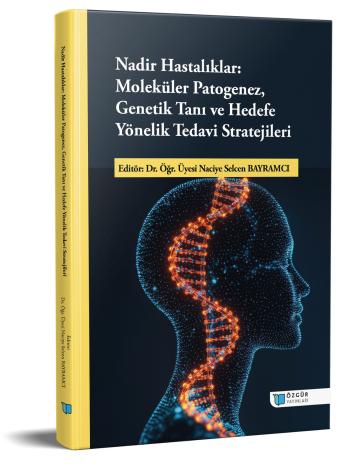
Rare Diseases: Molecular Pathogenesis, Genetic Diagnosis, and Targeted Therapeutic Strategies
Synopsis
Rare diseases constitute a group of complex disorders characterized by low individual prevalence yet collectively affecting hundreds of millions of people worldwide. The vast majority of these conditions are of genetic origin and exhibit marked phenotypic and genotypic heterogeneity. In recent years, rapid advances in molecular biology, genomics, transcriptomics, proteomics, metabolomics, and other multi-omics technologies—together with next-generation sequencing platforms, bioinformatics pipelines, and artificial intelligence–driven decision-support systems—have catalyzed a profound paradigm shift in the diagnosis, classification, and therapeutic management of rare diseases.
In response to this scientific transformation, Rare Diseases: Molecular Pathogenesis, Genetic Diagnosis and Targeted Therapeutic Strategies presents a comprehensive and interdisciplinary framework encompassing the molecular foundations of rare diseases, clinical translation, genetic diagnostic strategies, and emerging targeted therapeutic approaches.
The book opens with the definition, epidemiology, and molecular basis of rare diseases, followed by inheritance patterns, modern classification systems, and systems biology approaches, thereby establishing a robust theoretical foundation. It further examines cutting-edge biomedical domains including multi-omics technologies, artificial intelligence–assisted diagnostic systems, digital phenotyping, microbiome research, and the translational potential of plant-derived metabolites. Selected clinical entities are incorporated to illustrate the interface between molecular mechanisms and clinical manifestation, while ethical, legal, and societal dimensions are addressed within a health law perspective.
The eleven chapters included in this volume have been authored by scientists and academics distinguished in their respective disciplines through their expertise, scientific productivity, and scholarly contributions, and are grounded in the most recent international literature. Rather than merely compiling existing knowledge, the chapters adopt an analytical and translational perspective that bridges molecular mechanisms with clinical practice. Accordingly, this volume serves as a rigorous, up-to-date, and authoritative reference for researchers, academics, clinicians, and trainees across medicine, medical genetics, molecular biology and genetics, biology, pharmacy, biotechnology, bioengineering, and health sciences.
In recent years, Türkiye has achieved substantial progress in strengthening diagnostic infrastructure in rare diseases, integrating genomic technologies into clinical workflows, expanding next-generation sequencing applications, and enhancing both national and international research collaborations. Nevertheless, there remains a critical need for comprehensive, integrative, and up-to-date Turkish-language academic resources in this field. The advancement of scientific knowledge through high-quality scholarly output and the training of early-career researchers are essential pillars for the sustainability of progress in this domain.
This work is intended to contribute meaningfully to ongoing scientific research in Türkiye, to strengthen interdisciplinary and international collaborations, and to serve as a guiding reference for future scientific investigations.
Rare diseases impose a profound burden not only on affected individuals but also on families and healthcare systems. Accordingly, research in this field is not limited to elucidating molecular mechanisms; it is fundamentally directed toward improving early diagnosis, expanding effective therapeutic options, and enhancing overall quality of life. Scientific knowledge attains its highest value when it is translated into clinical application and ultimately benefits patients.
Genomic technologies, gene editing strategies, cell and gene therapies, artificial intelligence–driven systems, and personalized medicine approaches represent the core pillars of the future healthcare landscape. Strengthening interdisciplinary collaboration is indispensable for sustaining this transformation. This work has been prepared with the aim of facilitating the dissemination of scientific knowledge and supporting its translation into tangible patient benefit.
It is my conviction that this book will foster new scientific collaborations, inspire future research, and serve as a reliable reference source for the global scientific community. I also firmly believe that it will contribute to earlier diagnosis and more effective therapeutic strategies for individuals living with rare diseases.
I extend my sincere appreciation to all contributing scientists and academics for their valuable scholarly input to this volume.
Assistant Professor Dr. Naciye Selcen BAYRAMCI
Editor
Chapters
How to cite this book
License

This work is licensed under a Creative Commons Attribution-NonCommercial 4.0 International License.
Published
ISBN
DOI
Statistics
Categories
Copyright (c) 2026 Naciye Selcen Bayramcı; Naciye Selcen Bayramcı- Filiz Turan- Dilan Yavuz- Filiz Karaoğlan- Rümeysa Demirkaya- Büşra Görgün- Bedrettin Selvi- Filiz Demir- Emel Canpolat- Berke Can Acar- Çağlar Berkel- Ergün Sümer