
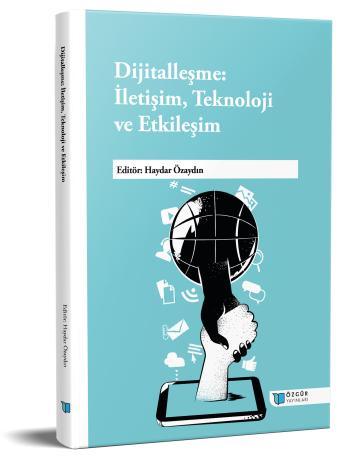
Digital Communication: Technology And Interaction
Synopsis
Digitalization is one of the defining phenomena of our age, fundamentally transforming communication, social structures, and human interaction. Communication has always been the foundation of social life; it has developed hand in hand with technology throughout history, from the most primitive forms of signaling to the digital devices we carry in our pockets today. Digitalization is not merely a technological advancement; it has spearheaded new transformations at the individual, cultural, and societal levels. These transformations are adding new dimensions to the ways in which people, societies, and organizations communicate. Our book, titled “Digital Communication: Technology and Interaction,” consists of eight chapters that aim to offer a broad perspective through an interdisciplinary approach.
The chapter by Zeynep Ekmekçi, titled “Theoretical Approaches to Digital Media Literacy: Critical, Social, and Cognitive Perspectives,” discusses digital media literacy within various theoretical frameworks and analyzes the concept through epistemological, critical, structuralist/post-structuralist, and cultural dimensions. Yılmaz Alışkan contributes the chapter “Inequality and Exploitation in the Digital Media Field: A General Overview of the Concepts of Digital Capitalism, Surveillance Capitalism, the Digital Divide, and Platform Capitalism” which analyzes the contemporary forms of exploitation in the digital world through these key conceptual frameworks. Zehra Dursun, in “The Dynamics of Digital Activism: Social Change and Participation in the Internet Age” explores how digital activism strengthens participation and inclusivity while addressing issues such as rapid mobilization, ethical and security challenges, and the growing need for strong media literacy.
Ahmet Özdemir’s chapter, “Public or Merely Accessible? The Public Sphere Between the Common World and Fluid Networks” examines the transformation of the public sphere in the digital age, combining the ideas of Arendt, Rancière, Habermas, Lippmann, and Sennett to analyze the tension between visibility, speed, and permanence on digital platforms. Meryem Arslan presents “Governance and Local Governments: Featured Digital Application Samples in Municipalities” emphasizing how internet and social media technologies enhance citizen participation, transparency, and accountability, and analyzing how digital tools are integrated into municipal governance processes.
Hülya Er’s contribution, “Digital Transformation and Customer Engagement in the Insurance Industry: Artificial Intelligence and Blockchain-Based InsurTech Applications” examines the transformative role of digital communication technologies in reshaping the insurance industry. The chapter highlights how AI- and blockchain-based applications improve efficiency, trust, and customer experience, while also noting cybersecurity and regulatory uncertainty as critical challenges. Özge Nur Muslu, in “Therapist–Client Boundaries in a Digitalized World: Social Media and Bidirectional Interactions” investigates how digital communication technologies and social media redefine professional boundaries between therapists and clients. The study discusses ethical, clinical, and relational risks, offering recommendations on digital privacy, professional identity, and ethical awareness.
Aysel Güney’s chapter, “Fostering Digital Security Awareness Through Education” focuses on the role of education in fostering digital security awareness amid increasing online risks. The discussion highlights how children and young people can develop safer digital habits and underlines the importance of integrating digital security education into formal curricula and public policy.
We would like to express our sincere gratitude to all contributing authors for their valuable efforts and wish our readers an enjoyable and insightful reading experience.
Chapters
How to cite this book
License

This work is licensed under a Creative Commons Attribution-NonCommercial 4.0 International License.
Published
ISBN
DOI
Statistics
Categories
Copyright (c) 2025 Haydar Özaydın; Zeynep Ekmekçi, Yılmaz Alışkan, Zehra Dursun, Ahmet Özdemir, Meryem Arslan, Hülya Er, Özge Nur Muslu, Aysel Güney