
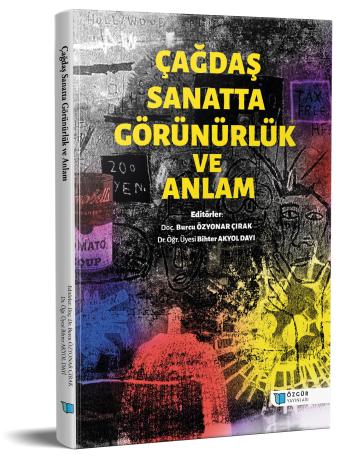
Visibility and Meaning in Contemporary Art
Synopsis
The relationship between visibility and meaning in contemporary art opens up a multilayered field of inquiry within aesthetic, conceptual, and artistic production contexts. The concept of visibility offers a theoretical framework that shifts the focus from what the image represents to how and through which perspectives it is constructed and interpreted. Based on the premise that the visible is a domain of representation shaped within social, political, and cultural contexts, the processes through which images are produced and meaning is constructed in contemporary art practices are critically examined.
Within this framework, visibility is addressed along the axes of representation, perception, body, space, identity, memory, power, and technology. The processes of meaning-making in the visual realm are analyzed through both theoretical approaches (including visual culture studies, aesthetic theory, and theories of representation) and contemporary artistic practices, enabling a pluralistic perspective.
Through artist and artwork analyses conducted within the framework of interdisciplinary artistic practices, this study aims to reconsider the relationship between visibility and meaning through concrete examples and to contribute to the deepening of theoretical debates in this field.
Chapters
How to cite this book
License

This work is licensed under a Creative Commons Attribution-NonCommercial 4.0 International License.
Published
ISBN
DOI
Statistics
Categories
Copyright (c) 2026 Bihter Akyol Dayi- Burcu Özyonar Çırak; Bihter Akyol Dayi- Burcu Özyonar Çırak- Buse Kızılırmak Çekinmez- Şükriye İnan Çalapkulu- Eda Seda Tosun- Gülşah Bayraktar- Gülşah Özdemir- Hatice Doğan- Sara Çebi